
Sonepur Mela 2026: Dates, Attractions, History and Complete Travel Guide
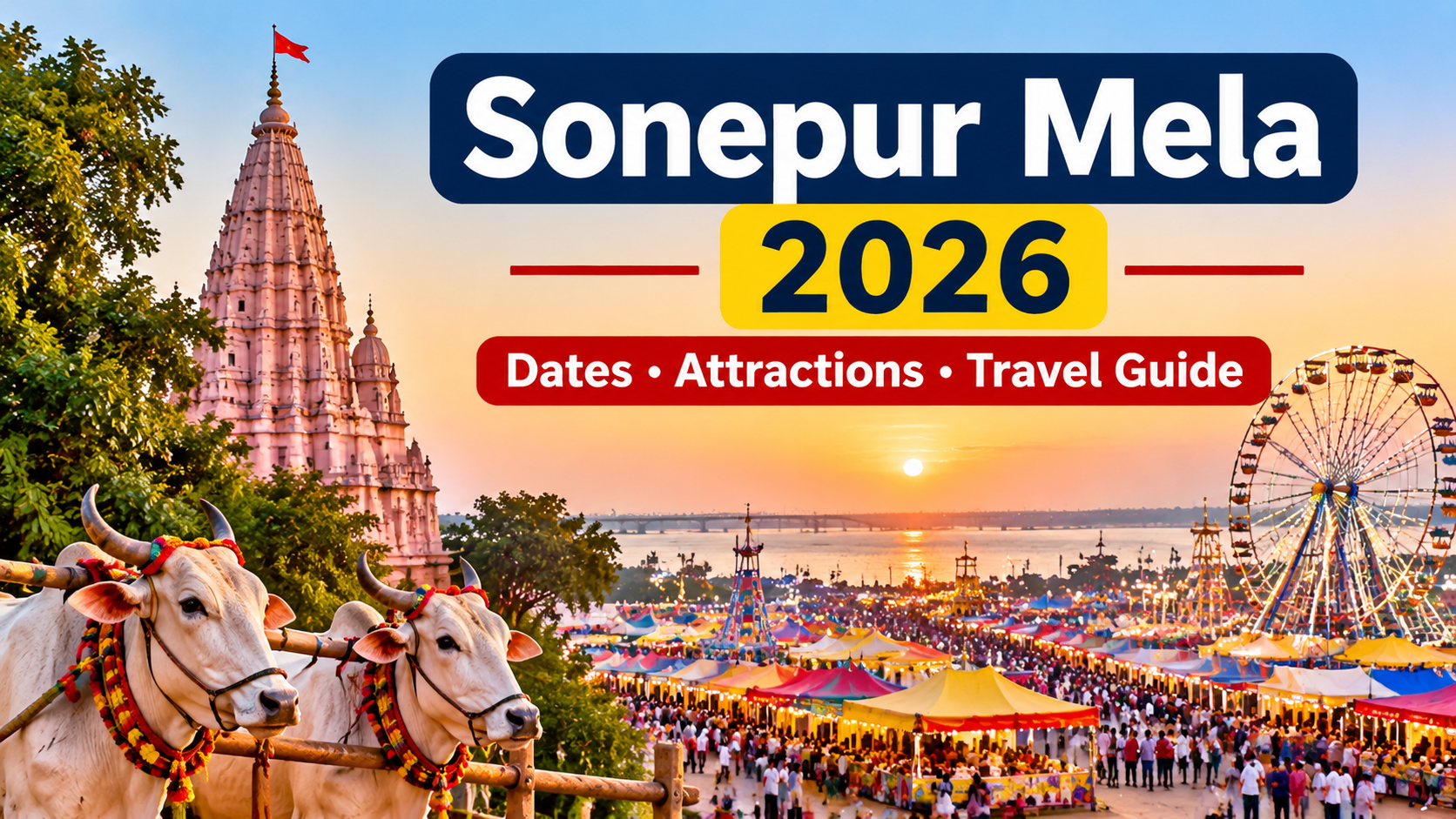
Every year, when November arrives, a special kind of excitement begins in Bihar. People start preparing for one of the state’s most famous traditional gatherings, the Sonepur Mela.
Located in Sonepur, near the meeting point of the Ganga and Gandak rivers, this historic fair brings together religion, rural traditions, local businesses, entertainment, food and culture.
Known as the Sonepur Mela 2026, this year’s event will run for 32 days, from 22 November to 23 December. Visitors can experience religious ceremonies, cultural performances, traditional sports, shopping stalls and a special food court featuring dishes from different districts of Bihar.
For many people, the fair is more than a tourist attraction. It is a part of Bihar’s cultural identity and a place where generations of traditions continue to meet.
Whether you are visiting for the first time or returning with your family, this guide covers everything you need to know about Sonepur Mela, including dates, history, attractions, food, shopping and travel routes from Patna.
Sonepur Mela 2026 Dates and Timings
The Sonepur Mela 2026 will be organised from 22 November to 23 December 2026.
The fair is organised around Kartik Purnima, an important religious occasion in the Hindu calendar. On this day, devotees visit the riverbanks for a holy bath and offer prayers at Hariharnath Temple.
Here are the important dates to remember.
| Event | Date |
|---|---|
| Sonepur Mela opening | 22 November 2026 |
| Kartik Purnima | 24 November 2026 |
| Main religious bathing period | Around 23 and 24 November |
| Fair closing date | 23 December 2026 |
| Total duration | 32 days |
The opening date and duration have been announced for the 2026 edition. Individual programme timings and performance schedules may be announced separately by the administration.
Travel tip: If you want to experience the religious atmosphere, Kartik Purnima is an important day to visit. However, expect significantly larger crowds around the bathing ghats. For a more relaxed shopping and sightseeing experience, consider visiting on a regular weekday.
Where Is Sonepur Mela Organised?
Sonepur Mela takes place in Sonepur town in Saran district of Bihar.
The fairground is located near the confluence of the Ganga and Gandak rivers. This location gives the fair its religious importance and makes it a major gathering point during Kartik Purnima.
Sonepur is also well connected to Patna and Hajipur through road and rail networks.
The famous Hariharnath Temple is one of the central attractions of the area and an important place for visitors during the fair.
History of Sonepur Mela: How Did This Famous Fair Begin?
The history of Sonepur Mela is closely connected with the traditional cattle trade, religious beliefs and rural economy of Bihar.
For generations, traders, farmers and visitors have gathered here to buy and sell livestock, exchange goods and participate in religious activities.
Historically, the fair was particularly known for its large livestock market. Horses, cattle and other animals attracted traders from different regions.
The fair is also traditionally associated with stories of ancient royal trade. Historical accounts and popular traditions connect the region with the exchange of elephants and horses during earlier periods.
Over time, Sonepur Mela developed beyond a livestock market. It became a major cultural and social gathering where people could meet, trade, enjoy performances and participate in religious ceremonies.
Today, it is recognised as one of Asia’s largest and oldest traditional cattle fairs.
The Bihar Tourism Department continues to promote the fair as an important part of the state’s cultural and tourism identity.
Why Is Sonepur Mela Also Called Harihar Kshetra Mela?
Sonepur Mela is also popularly known as Harihar Kshetra Mela because of its connection with Hariharnath Temple.
The temple is dedicated to Lord Harihar, a combined form of Lord Vishnu and Lord Shiva.
According to Hindu tradition, the region is associated with the story of Gajendra Moksha.
The story describes an elephant named Gajendra who was caught by a crocodile while bathing in a water body. When the elephant prayed for help, Lord Vishnu came to his rescue.
This story is an important part of the religious identity of the region.
During Kartik Purnima, devotees visit the area, take a holy dip and offer prayers at the temple.
The religious significance of the location is one of the reasons why Sonepur Mela attracts visitors from different parts of India.
Top Attractions at Sonepur Mela 2026
There is much more to Sonepur Mela than its traditional livestock market. The fair offers a combination of religious activities, entertainment, sports, shopping and cultural experiences.
Here are some of the attractions visitors can look forward to in 2026.
1. Hariharnath Temple
Hariharnath Temple is one of the most important religious attractions at Sonepur.
Located near the fairground, the temple attracts devotees throughout the year, with particularly large gatherings during Kartik Purnima.
Visitors come here to offer prayers and experience the religious atmosphere of Harihar Kshetra.
If you are visiting Sonepur Mela for the first time, this temple should be one of your first stops.
2. Holy Dip at the Ganga and Gandak Confluence
One of the most important traditions associated with Sonepur Mela is the holy bath during Kartik Purnima.
Devotees gather near the riverbanks and take a ceremonial dip as part of their religious beliefs.
The river ghats become especially busy during this period.
Visitors should follow the instructions of the local administration and avoid entering restricted areas or deep water.
3. Maha Aarti at the Gandak River
The riverfront offers a special atmosphere during the fair.
For the 2026 edition, regular Maha Aarti at the Gandak riverbank has been announced as one of the planned religious attractions.
The sight of lamps, prayers and devotional activities near the river is expected to be an important experience for visitors.
Check the local programme schedule for exact timings.
4. Traditional Wrestling and Dangal
Traditional wrestling is another attraction associated with the fair.
Dangal competitions bring together wrestlers who demonstrate their strength, technique and physical skills.
These competitions are a reminder of Bihar’s traditional sporting culture.
The 2026 programme includes traditional wrestling events.
5. Boat Race
The river setting makes boat racing a natural attraction at Sonepur Mela.
A traditional boat race has been included among the planned sports activities for the 2026 fair.
It is an interesting opportunity to experience the relationship between local communities and the rivers of Bihar.
The exact event schedule should be checked with the organisers.
6. Cultural Programmes and Folk Performances
Sonepur Mela is also a celebration of Indian folk culture.
For 2026, cultural programmes are planned throughout the 32-day fair.
Performances will showcase different regional traditions, with artists from Bihar and other parts of the country.
Visitors may get the opportunity to experience folk music, dance and other traditional art forms.
The programme is expected to include performances representing different cultural regions of India.
7. Ramleela and Bhagwat Katha
Religious storytelling and performances are also part of the planned activities for 2026.
Ramleela and Bhagwat Katha are expected to attract devotees and families.
These programmes add another dimension to the fair, connecting entertainment with religious traditions.
8. Kite Flying
Kite flying is another planned activity at the 2026 fair.
It adds a colourful and entertaining element to the event, particularly for families and younger visitors.
Check the official schedule for the dates of organised competitions.
9. Art and Craft Fair
For people interested in traditional products and local creativity, the art and craft fair is worth exploring.
The administration has planned dedicated craft and exhibition spaces.
Visitors can explore handmade products, traditional art and items representing the culture of Bihar.
10. Government Exhibitions and Rural Life Displays
Different government departments are expected to set up stalls and exhibitions in the Nakhas area.
These displays will provide information about government schemes, public services, products and other activities.
The fair also offers an opportunity to understand rural life, agriculture and traditional businesses.
Food at Sonepur Mela 2026: What Should You Try?
Food is an important part of every Indian fair, and Sonepur Mela is no exception.
This year, food is expected to be one of the major attractions.
According to preparations reported on 14 November 2026, the district administration is developing a modern food court where visitors will be able to explore traditional and speciality dishes from different districts of Bihar.
Stalls from established food brands are also planned.
Here are some traditional Bihar food items worth looking for during your visit.
1. Litti Chokha
No discussion of Bihar food is complete without litti chokha.
Litti is prepared using wheat flour and a filling of roasted gram flour, commonly known as sattu.
It is traditionally served with chokha made from roasted potato, brinjal or tomato.
2. Sattu Paratha
Sattu paratha is a popular traditional dish made with a filling of roasted gram flour and spices.
It is filling, flavourful and commonly enjoyed with chutney, curd or vegetables.
3. Thekua
Thekua is a traditional sweet from Bihar, especially associated with Chhath Puja.
Made using wheat flour, jaggery or sugar and ghee, it is known for its crisp texture and distinctive taste.
4. Khaja
Khaja is a popular layered sweet known for its crispy texture and sweetness.
It is associated with several regions of Bihar and is a good option to explore at traditional sweet shops.
5. Malpua
Malpua is another traditional Indian sweet that visitors may find at food stalls.
It is prepared using a batter that is fried and often served after being dipped in sugar syrup.
6. Local Specialities from Different Districts
One of the interesting additions planned for Sonepur Mela 2026 is a food court showcasing traditional and speciality dishes from all districts of Bihar.
This could give visitors an opportunity to explore different regional food traditions in one place.
The actual availability of individual dishes will depend on the participating stalls.
Food tip: Choose clean and freshly prepared food stalls. Carry drinking water, especially if you are visiting with children or senior citizens.
Shopping at Sonepur Mela 2026
Shopping is another reason why people visit Sonepur Mela.
The fair has traditionally been known for its large marketplace, where traders and buyers gather to explore a wide range of products.
The 2026 edition is expected to include shopping areas, government exhibitions, an art and craft fair and stalls from different vendors.
Here are some categories worth exploring.
1. Handicrafts and Traditional Products
Look for locally made decorative items, handmade products and traditional crafts.
These products offer a glimpse into the artistic skills and creativity of different communities.
2. Clothes and Fabrics
Traditional fairs often feature stalls selling garments, fabrics and everyday clothing.
Visitors can explore different designs and compare products before purchasing.
3. Toys and Household Items
Traditional toys, utensils and household products have long been part of the Sonepur fair marketplace.
These stalls are particularly interesting for visitors who enjoy exploring local markets.
4. Agricultural Tools and Equipment
The traditional rural marketplace also has a connection with agriculture.
Agricultural tools and related products have historically been sold at the fair.
5. Jewellery and Decorative Items
Visitors can also look for jewellery, accessories and decorative products at the shopping stalls.
Shopping tip: Compare prices at multiple stalls, check the quality before buying and ask about the material and making of handmade products.
Travel Guide: How to Reach Sonepur Mela from Patna
Sonepur is easily accessible from Patna, making it a popular destination for a day trip.
The distance and travel time depend on your starting location, traffic and selected route.
Here are the main ways to reach the fair.
By Road via JP Setu
One of the most convenient routes from many parts of Patna is through JP Setu, also known as the Digha Sonpur Bridge.
The route is:
Patna → Digha → JP Setu → Pahleja Ghat → Sonepur Mela
This route is particularly useful for people travelling from Digha, Danapur, Rajiv Nagar and nearby areas.
After crossing the Ganga, follow local directions towards the Sonepur fairground.
By Road via Mahatma Gandhi Setu
Another option is to travel through Mahatma Gandhi Setu.
The route is:
Patna → Mahatma Gandhi Setu → Hajipur → Sonepur
This route may be suitable for people travelling from Patna City, Kankarbagh and other eastern parts of Patna, depending on traffic conditions.
By Train
Sonepur Junction is one of the convenient railway stations for visitors.
The station is approximately 2 kilometres from the fairground, according to the Saran district administration’s tourism information.
You can also travel to Hajipur Junction and continue towards Sonepur by local transport.
If you are travelling from Patna, check available train services and timings through Indian Railways before leaving.
By Air
The nearest major airport is Jay Prakash Narayan International Airport in Patna.
The Saran district website lists the airport at approximately 25 kilometres from Sonepur.
From the airport, you can hire a taxi or use available local transport to reach the fair.
Travel Route Summary
| Transport | Suggested route |
|---|---|
| Car or bike via JP Setu | Patna, Digha, JP Setu, Pahleja, Sonepur |
| Car or bike via Gandhi Setu | Patna, Gandhi Setu, Hajipur, Sonepur |
| Train | Sonepur Junction, then local transport |
| Flight | Patna Airport, then road transport |
Important: Traffic restrictions, parking locations and diversions may change during the fair. Follow the latest instructions from the Saran district administration, particularly around Kartik Purnima.
Best Time to Visit Sonepur Mela 2026
The best time to visit depends on what you want to experience.
For Religious Activities
Visit around 23 and 24 November, when the Kartik Purnima bathing period attracts large numbers of devotees.
This is an important time for religious ceremonies and temple visits.
However, expect heavy crowds and possible traffic restrictions.
For Shopping and Exploring
If you want to explore the marketplace, food stalls and exhibitions without the biggest religious crowds, consider a weekday after the opening period.
For Cultural Programmes
The fair will host cultural activities throughout its 32-day duration.
Check the programme announced by the district administration before choosing your travel date.
Useful Travel Tips for Visitors
A little preparation can make your visit to Sonepur Mela more comfortable.
- Start early if travelling from Patna, especially during the first few days.
- Check traffic updates before choosing JP Setu or Gandhi Setu.
- Carry cash for small purchases, while keeping digital payment options available.
- Wear comfortable footwear because the fairground involves considerable walking.
- Keep your phone and valuables secure in crowded areas.
- Carry a light jacket or shawl for cooler mornings and evenings in November and December.
- If travelling with children, agree on a meeting point in case you get separated.
- Follow barricades and instructions near river ghats.
- Avoid entering restricted areas or deep water during religious bathing activities.
- Check accommodation and transport arrangements before planning an overnight stay.
What Makes Sonepur Mela Special for Bihar?
Sonepur Mela is not just a place to shop or enjoy entertainment. It represents a part of Bihar’s living cultural heritage.
The fair brings together farmers, traders, artists, religious visitors, local businesses and tourists.
It creates a space where traditional rural life and modern arrangements exist together.
For visitors from outside Bihar, it offers an opportunity to understand the state’s culture beyond its famous historical monuments and religious destinations.
For people living in Bihar, it is a chance to experience a tradition that has been passed down through generations.
The combination of religious ceremonies, folk performances, traditional food and local markets makes Sonepur Mela an important cultural event.
Frequently Asked Questions About Sonepur Mela 2026
1. When will Sonepur Mela 2026 start?
Sonepur Mela 2026 is scheduled to start on 22 November 2026 and continue until 23 December 2026.
2. How many days will Sonepur Mela 2026 last?
The 2026 fair is scheduled to run for 32 days.
3. Where is Sonepur Mela organised?
Sonepur Mela is organised in Sonepur town in Saran district, Bihar, near the confluence of the Ganga and Gandak rivers.
4. What is the main attraction of Sonepur Mela?
Major attractions include Hariharnath Temple, Kartik Purnima bathing activities, Maha Aarti, cultural programmes, traditional wrestling, boat races, kite flying, shopping and food stalls.
5. How can I reach Sonepur Mela from Patna?
You can reach Sonepur from Patna through JP Setu via Digha and Pahleja Ghat, or through Mahatma Gandhi Setu via Hajipur. Train services to Sonepur Junction are another option.
6. What is the nearest railway station to Sonepur Mela?
Sonepur Junction is the nearest major railway station for visitors, approximately 2 kilometres from the fairground.
7. What food is famous at Sonepur Mela?
Visitors can look for traditional Bihar dishes such as litti chokha, sattu paratha, thekua, khaja and malpua. A modern food court featuring speciality dishes from different Bihar districts is also planned for 2026.
8. Is Sonepur Mela suitable for families?
Yes. The fair offers religious activities, cultural programmes, food stalls, shopping and entertainment. Families should plan carefully around the busiest bathing days.
9. Why is Sonepur Mela called Harihar Kshetra Mela?
The fair is called Harihar Kshetra Mela because of its religious association with Hariharnath Temple, dedicated to Lord Harihar, a combined form of Lord Vishnu and Lord Shiva.
10. Is Sonepur Mela only a cattle fair?
No. Although it is historically famous for livestock trading, the modern fair also includes religious activities, cultural programmes, exhibitions, food courts, shopping and traditional sports.
Final Thoughts
Sonepur Mela is one of those experiences that helps you understand the culture and traditions of Bihar.
From the religious atmosphere of Hariharnath Temple to the energy of the marketplace, traditional food, folk performances and sporting activities, the fair offers something different for every visitor.
The 2026 edition, running from 22 November to 23 December, is another opportunity to experience this historic gathering.
If you are in Bihar, consider making time for a visit with your family or friends.
Explore the stalls, taste traditional food, watch cultural performances and experience the atmosphere of Harihar Kshetra.
Because sometimes, the best way to understand a place is not just to read about its history, but to experience its culture.
Have you ever visited Sonepur Mela? Share your experience and favourite memory with us in the comments.
Follow Bihar Vibes for more stories, travel guides, festivals and discoveries from Bihar.